/** * REST API: WP_REST_Request class * * @package WordPress * @subpackage REST_API * @since 4.4.0 */ /** * Core class used to implement a REST request object. * * Contains data from the request, to be passed to the callback. * * Note: This implements ArrayAccess, and acts as an array of parameters when * used in that manner. It does not use ArrayObject (as we cannot rely on SPL), * so be aware it may have non-array behaviour in some cases. * * Note: When using features provided by ArrayAccess, be aware that WordPress deliberately * does not distinguish between arguments of the same name for different request methods. * For instance, in a request with `GET id=1` and `POST id=2`, `$request['id']` will equal * 2 (`POST`) not 1 (`GET`). For more precision between request methods, use * WP_REST_Request::get_body_params(), WP_REST_Request::get_url_params(), etc. * * @since 4.4.0 * * @see ArrayAccess */ class WP_REST_Request implements ArrayAccess { /** * HTTP method. * * @since 4.4.0 * @var string */ protected $method = ''; /** * Parameters passed to the request. * * These typically come from the `$_GET`, `$_POST` and `$_FILES` * superglobals when being created from the global scope. * * @since 4.4.0 * @var array Contains GET, POST and FILES keys mapping to arrays of data. */ protected $params; /** * HTTP headers for the request. * * @since 4.4.0 * @var array Map of key to value. Key is always lowercase, as per HTTP specification. */ protected $headers = array(); /** * Body data. * * @since 4.4.0 * @var string Binary data from the request. */ protected $body = null; /** * Route matched for the request. * * @since 4.4.0 * @var string */ protected $route; /** * Attributes (options) for the route that was matched. * * This is the options array used when the route was registered, typically * containing the callback as well as the valid methods for the route. * * @since 4.4.0 * @var array Attributes for the request. */ protected $attributes = array(); /** * Used to determine if the JSON data has been parsed yet. * * Allows lazy-parsing of JSON data where possible. * * @since 4.4.0 * @var bool */ protected $parsed_json = false; /** * Used to determine if the body data has been parsed yet. * * @since 4.4.0 * @var bool */ protected $parsed_body = false; /** * Constructor. * * @since 4.4.0 * * @param string $method Optional. Request method. Default empty. * @param string $route Optional. Request route. Default empty. * @param array $attributes Optional. Request attributes. Default empty array. */ public function __construct( $method = '', $route = '', $attributes = array() ) { $this->params = array( 'URL' => array(), 'GET' => array(), 'POST' => array(), 'FILES' => array(), // See parse_json_params. 'JSON' => null, 'defaults' => array(), ); $this->set_method( $method ); $this->set_route( $route ); $this->set_attributes( $attributes ); } /** * Retrieves the HTTP method for the request. * * @since 4.4.0 * * @return string HTTP method. */ public function get_method() { return $this->method; } /** * Sets HTTP method for the request. * * @since 4.4.0 * * @param string $method HTTP method. */ public function set_method( $method ) { $this->method = strtoupper( $method ); } /** * Retrieves all headers from the request. * * @since 4.4.0 * * @return array Map of key to value. Key is always lowercase, as per HTTP specification. */ public function get_headers() { return $this->headers; } /** * Canonicalizes the header name. * * Ensures that header names are always treated the same regardless of * source. Header names are always case insensitive. * * Note that we treat `-` (dashes) and `_` (underscores) as the same * character, as per header parsing rules in both Apache and nginx. * * @link https://stackoverflow.com/q/18185366 * @link https://www.nginx.com/resources/wiki/start/topics/tutorials/config_pitfalls/#missing-disappearing-http-headers * @link https://nginx.org/en/docs/http/ngx_http_core_module.html#underscores_in_headers * * @since 4.4.0 * @static * * @param string $key Header name. * @return string Canonicalized name. */ public static function canonicalize_header_name( $key ) { $key = strtolower( $key ); $key = str_replace( '-', '_', $key ); return $key; } /** * Retrieves the given header from the request. * * If the header has multiple values, they will be concatenated with a comma * as per the HTTP specification. Be aware that some non-compliant headers * (notably cookie headers) cannot be joined this way. * * @since 4.4.0 * * @param string $key Header name, will be canonicalized to lowercase. * @return string|null String value if set, null otherwise. */ public function get_header( $key ) { $key = $this->canonicalize_header_name( $key ); if ( ! isset( $this->headers[ $key ] ) ) { return null; } return implode( ',', $this->headers[ $key ] ); } /** * Retrieves header values from the request. * * @since 4.4.0 * * @param string $key Header name, will be canonicalized to lowercase. * @return array|null List of string values if set, null otherwise. */ public function get_header_as_array( $key ) { $key = $this->canonicalize_header_name( $key ); if ( ! isset( $this->headers[ $key ] ) ) { return null; } return $this->headers[ $key ]; } /** * Sets the header on request. * * @since 4.4.0 * * @param string $key Header name. * @param string $value Header value, or list of values. */ public function set_header( $key, $value ) { $key = $this->canonicalize_header_name( $key ); $value = (array) $value; $this->headers[ $key ] = $value; } /** * Appends a header value for the given header. * * @since 4.4.0 * * @param string $key Header name. * @param string $value Header value, or list of values. */ public function add_header( $key, $value ) { $key = $this->canonicalize_header_name( $key ); $value = (array) $value; if ( ! isset( $this->headers[ $key ] ) ) { $this->headers[ $key ] = array(); } $this->headers[ $key ] = array_merge( $this->headers[ $key ], $value ); } /** * Removes all values for a header. * * @since 4.4.0 * * @param string $key Header name. */ public function remove_header( $key ) { $key = $this->canonicalize_header_name( $key ); unset( $this->headers[ $key ] ); } /** * Sets headers on the request. * * @since 4.4.0 * * @param array $headers Map of header name to value. * @param bool $override If true, replace the request's headers. Otherwise, merge with existing. */ public function set_headers( $headers, $override = true ) { if ( true === $override ) { $this->headers = array(); } foreach ( $headers as $key => $value ) { $this->set_header( $key, $value ); } } /** * Retrieves the content-type of the request. * * @since 4.4.0 * * @return array Map containing 'value' and 'parameters' keys. */ public function get_content_type() { $value = $this->get_header( 'content-type' ); if ( empty( $value ) ) { return null; } $parameters = ''; if ( strpos( $value, ';' ) ) { list( $value, $parameters ) = explode( ';', $value, 2 ); } $value = strtolower( $value ); if ( strpos( $value, '/' ) === false ) { return null; } // Parse type and subtype out. list( $type, $subtype ) = explode( '/', $value, 2 ); $data = compact( 'value', 'type', 'subtype', 'parameters' ); $data = array_map( 'trim', $data ); return $data; } /** * Retrieves the parameter priority order. * * Used when checking parameters in get_param(). * * @since 4.4.0 * * @return array List of types to check, in order of priority. */ protected function get_parameter_order() { $order = array(); $content_type = $this->get_content_type(); if ( $content_type['value'] === 'application/json' ) { $order[] = 'JSON'; } $this->parse_json_params(); // Ensure we parse the body data. $body = $this->get_body(); if ( 'POST' !== $this->method && ! empty( $body ) ) { $this->parse_body_params(); } $accepts_body_data = array( 'POST', 'PUT', 'PATCH', 'DELETE' ); if ( in_array( $this->method, $accepts_body_data ) ) { $order[] = 'POST'; } $order[] = 'GET'; $order[] = 'URL'; $order[] = 'defaults'; /** * Filters the parameter order. * * The order affects which parameters are checked when using get_param() and family. * This acts similarly to PHP's `request_order` setting. * * @since 4.4.0 * * @param array $order { * An array of types to check, in order of priority. * * @param string $type The type to check. * } * @param WP_REST_Request $this The request object. */ return apply_filters( 'rest_request_parameter_order', $order, $this ); } /** * Retrieves a parameter from the request. * * @since 4.4.0 * * @param string $key Parameter name. * @return mixed|null Value if set, null otherwise. */ public function get_param( $key ) { $order = $this->get_parameter_order(); foreach ( $order as $type ) { // Determine if we have the parameter for this type. if ( isset( $this->params[ $type ][ $key ] ) ) { return $this->params[ $type ][ $key ]; } } return null; } /** * Sets a parameter on the request. * * @since 4.4.0 * * @param string $key Parameter name. * @param mixed $value Parameter value. */ public function set_param( $key, $value ) { $order = $this->get_parameter_order(); $this->params[ $order[0] ][ $key ] = $value; } /** * Retrieves merged parameters from the request. * * The equivalent of get_param(), but returns all parameters for the request. * Handles merging all the available values into a single array. * * @since 4.4.0 * * @return array Map of key to value. */ public function get_params() { $order = $this->get_parameter_order(); $order = array_reverse( $order, true ); $params = array(); foreach ( $order as $type ) { // array_merge / the "+" operator will mess up // numeric keys, so instead do a manual foreach. foreach ( (array) $this->params[ $type ] as $key => $value ) { $params[ $key ] = $value; } } return $params; } /** * Retrieves parameters from the route itself. * * These are parsed from the URL using the regex. * * @since 4.4.0 * * @return array Parameter map of key to value. */ public function get_url_params() { return $this->params['URL']; } /** * Sets parameters from the route. * * Typically, this is set after parsing the URL. * * @since 4.4.0 * * @param array $params Parameter map of key to value. */ public function set_url_params( $params ) { $this->params['URL'] = $params; } /** * Retrieves parameters from the query string. * * These are the parameters you'd typically find in `$_GET`. * * @since 4.4.0 * * @return array Parameter map of key to value */ public function get_query_params() { return $this->params['GET']; } /** * Sets parameters from the query string. * * Typically, this is set from `$_GET`. * * @since 4.4.0 * * @param array $params Parameter map of key to value. */ public function set_query_params( $params ) { $this->params['GET'] = $params; } /** * Retrieves parameters from the body. * * These are the parameters you'd typically find in `$_POST`. * * @since 4.4.0 * * @return array Parameter map of key to value. */ public function get_body_params() { return $this->params['POST']; } /** * Sets parameters from the body. * * Typically, this is set from `$_POST`. * * @since 4.4.0 * * @param array $params Parameter map of key to value. */ public function set_body_params( $params ) { $this->params['POST'] = $params; } /** * Retrieves multipart file parameters from the body. * * These are the parameters you'd typically find in `$_FILES`. * * @since 4.4.0 * * @return array Parameter map of key to value */ public function get_file_params() { return $this->params['FILES']; } /** * Sets multipart file parameters from the body. * * Typically, this is set from `$_FILES`. * * @since 4.4.0 * * @param array $params Parameter map of key to value. */ public function set_file_params( $params ) { $this->params['FILES'] = $params; } /** * Retrieves the default parameters. * * These are the parameters set in the route registration. * * @since 4.4.0 * * @return array Parameter map of key to value */ public function get_default_params() { return $this->params['defaults']; } /** * Sets default parameters. * * These are the parameters set in the route registration. * * @since 4.4.0 * * @param array $params Parameter map of key to value. */ public function set_default_params( $params ) { $this->params['defaults'] = $params; } /** * Retrieves the request body content. * * @since 4.4.0 * * @return string Binary data from the request body. */ public function get_body() { return $this->body; } /** * Sets body content. * * @since 4.4.0 * * @param string $data Binary data from the request body. */ public function set_body( $data ) { $this->body = $data; // Enable lazy parsing. $this->parsed_json = false; $this->parsed_body = false; $this->params['JSON'] = null; } /** * Retrieves the parameters from a JSON-formatted body. * * @since 4.4.0 * * @return array Parameter map of key to value. */ public function get_json_params() { // Ensure the parameters have been parsed out. $this->parse_json_params(); return $this->params['JSON']; } /** * Parses the JSON parameters. * * Avoids parsing the JSON data until we need to access it. * * @since 4.4.0 * @since 4.7.0 Returns error instance if value cannot be decoded. * @return true|WP_Error True if the JSON data was passed or no JSON data was provided, WP_Error if invalid JSON was passed. */ protected function parse_json_params() { if ( $this->parsed_json ) { return true; } $this->parsed_json = true; // Check that we actually got JSON. $content_type = $this->get_content_type(); if ( empty( $content_type ) || 'application/json' !== $content_type['value'] ) { return true; } $body = $this->get_body(); if ( empty( $body ) ) { return true; } $params = json_decode( $body, true ); /* * Check for a parsing error. * * Note that due to WP's JSON compatibility functions, json_last_error * might not be defined: https://core.trac.wordpress.org/ticket/27799 */ if ( null === $params && ( ! function_exists( 'json_last_error' ) || JSON_ERROR_NONE !== json_last_error() ) ) { // Ensure subsequent calls receive error instance. $this->parsed_json = false; $error_data = array( 'status' => WP_Http::BAD_REQUEST, ); if ( function_exists( 'json_last_error' ) ) { $error_data['json_error_code'] = json_last_error(); $error_data['json_error_message'] = json_last_error_msg(); } return new WP_Error( 'rest_invalid_json', __( 'Invalid JSON body passed.' ), $error_data ); } $this->params['JSON'] = $params; return true; } /** * Parses the request body parameters. * * Parses out URL-encoded bodies for request methods that aren't supported * natively by PHP. In PHP 5.x, only POST has these parsed automatically. * * @since 4.4.0 */ protected function parse_body_params() { if ( $this->parsed_body ) { return; } $this->parsed_body = true; /* * Check that we got URL-encoded. Treat a missing content-type as * URL-encoded for maximum compatibility. */ $content_type = $this->get_content_type(); if ( ! empty( $content_type ) && 'application/x-www-form-urlencoded' !== $content_type['value'] ) { return; } parse_str( $this->get_body(), $params ); /* * Amazingly, parse_str follows magic quote rules. Sigh. * * NOTE: Do not refactor to use `wp_unslash`. */ if ( get_magic_quotes_gpc() ) { $params = stripslashes_deep( $params ); } /* * Add to the POST parameters stored internally. If a user has already * set these manually (via `set_body_params`), don't override them. */ $this->params['POST'] = array_merge( $params, $this->params['POST'] ); } /** * Retrieves the route that matched the request. * * @since 4.4.0 * * @return string Route matching regex. */ public function get_route() { return $this->route; } /** * Sets the route that matched the request. * * @since 4.4.0 * * @param string $route Route matching regex. */ public function set_route( $route ) { $this->route = $route; } /** * Retrieves the attributes for the request. * * These are the options for the route that was matched. * * @since 4.4.0 * * @return array Attributes for the request. */ public function get_attributes() { return $this->attributes; } /** * Sets the attributes for the request. * * @since 4.4.0 * * @param array $attributes Attributes for the request. */ public function set_attributes( $attributes ) { $this->attributes = $attributes; } /** * Sanitizes (where possible) the params on the request. * * This is primarily based off the sanitize_callback param on each registered * argument. * * @since 4.4.0 * * @return true|WP_Error True if parameters were sanitized, WP_Error if an error occurred during sanitization. */ public function sanitize_params() { $attributes = $this->get_attributes(); // No arguments set, skip sanitizing. if ( empty( $attributes['args'] ) ) { return true; } $order = $this->get_parameter_order(); $invalid_params = array(); foreach ( $order as $type ) { if ( empty( $this->params[ $type ] ) ) { continue; } foreach ( $this->params[ $type ] as $key => $value ) { if ( ! isset( $attributes['args'][ $key ] ) ) { continue; } $param_args = $attributes['args'][ $key ]; // If the arg has a type but no sanitize_callback attribute, default to rest_parse_request_arg. if ( ! array_key_exists( 'sanitize_callback', $param_args ) && ! empty( $param_args['type'] ) ) { $param_args['sanitize_callback'] = 'rest_parse_request_arg'; } // If there's still no sanitize_callback, nothing to do here. if ( empty( $param_args['sanitize_callback'] ) ) { continue; } $sanitized_value = call_user_func( $param_args['sanitize_callback'], $value, $this, $key ); if ( is_wp_error( $sanitized_value ) ) { $invalid_params[ $key ] = $sanitized_value->get_error_message(); } else { $this->params[ $type ][ $key ] = $sanitized_value; } } } if ( $invalid_params ) { return new WP_Error( 'rest_invalid_param', sprintf( __( 'Invalid parameter(s): %s' ), implode( ', ', array_keys( $invalid_params ) ) ), array( 'status' => 400, 'params' => $invalid_params ) ); } return true; } /** * Checks whether this request is valid according to its attributes. * * @since 4.4.0 * * @return bool|WP_Error True if there are no parameters to validate or if all pass validation, * WP_Error if required parameters are missing. */ public function has_valid_params() { // If JSON data was passed, check for errors. $json_error = $this->parse_json_params(); if ( is_wp_error( $json_error ) ) { return $json_error; } $attributes = $this->get_attributes(); $required = array(); // No arguments set, skip validation. if ( empty( $attributes['args'] ) ) { return true; } foreach ( $attributes['args'] as $key => $arg ) { $param = $this->get_param( $key ); if ( isset( $arg['required'] ) && true === $arg['required'] && null === $param ) { $required[] = $key; } } if ( ! empty( $required ) ) { return new WP_Error( 'rest_missing_callback_param', sprintf( __( 'Missing parameter(s): %s' ), implode( ', ', $required ) ), array( 'status' => 400, 'params' => $required ) ); } /* * Check the validation callbacks for each registered arg. * * This is done after required checking as required checking is cheaper. */ $invalid_params = array(); foreach ( $attributes['args'] as $key => $arg ) { $param = $this->get_param( $key ); if ( null !== $param && ! empty( $arg['validate_callback'] ) ) { $valid_check = call_user_func( $arg['validate_callback'], $param, $this, $key ); if ( false === $valid_check ) { $invalid_params[ $key ] = __( 'Invalid parameter.' ); } if ( is_wp_error( $valid_check ) ) { $invalid_params[ $key ] = $valid_check->get_error_message(); } } } if ( $invalid_params ) { return new WP_Error( 'rest_invalid_param', sprintf( __( 'Invalid parameter(s): %s' ), implode( ', ', array_keys( $invalid_params ) ) ), array( 'status' => 400, 'params' => $invalid_params ) ); } return true; } /** * Checks if a parameter is set. * * @since 4.4.0 * * @param string $offset Parameter name. * @return bool Whether the parameter is set. */ public function offsetExists( $offset ) { $order = $this->get_parameter_order(); foreach ( $order as $type ) { if ( isset( $this->params[ $type ][ $offset ] ) ) { return true; } } return false; } /** * Retrieves a parameter from the request. * * @since 4.4.0 * * @param string $offset Parameter name. * @return mixed|null Value if set, null otherwise. */ public function offsetGet( $offset ) { return $this->get_param( $offset ); } /** * Sets a parameter on the request. * * @since 4.4.0 * * @param string $offset Parameter name. * @param mixed $value Parameter value. */ public function offsetSet( $offset, $value ) { $this->set_param( $offset, $value ); } /** * Removes a parameter from the request. * * @since 4.4.0 * * @param string $offset Parameter name. */ public function offsetUnset( $offset ) { $order = $this->get_parameter_order(); // Remove the offset from every group. foreach ( $order as $type ) { unset( $this->params[ $type ][ $offset ] ); } } /** * Retrieves a WP_REST_Request object from a full URL. * * @static * @since 4.5.0 * * @param string $url URL with protocol, domain, path and query args. * @return WP_REST_Request|false WP_REST_Request object on success, false on failure. */ public static function from_url( $url ) { $bits = parse_url( $url ); $query_params = array(); if ( ! empty( $bits['query'] ) ) { wp_parse_str( $bits['query'], $query_params ); } $api_root = rest_url(); if ( get_option( 'permalink_structure' ) && 0 === strpos( $url, $api_root ) ) { // Pretty permalinks on, and URL is under the API root. $api_url_part = substr( $url, strlen( untrailingslashit( $api_root ) ) ); $route = parse_url( $api_url_part, PHP_URL_PATH ); } elseif ( ! empty( $query_params['rest_route'] ) ) { // ?rest_route=... set directly $route = $query_params['rest_route']; unset( $query_params['rest_route'] ); } $request = false; if ( ! empty( $route ) ) { $request = new WP_REST_Request( 'GET', $route ); $request->set_query_params( $query_params ); } /** * Filters the request generated from a URL. * * @since 4.5.0 * * @param WP_REST_Request|false $request Generated request object, or false if URL * could not be parsed. * @param string $url URL the request was generated from. */ return apply_filters( 'rest_request_from_url', $request, $url ); } } Le Sourire de l’iguane | Chloé Dubreuil

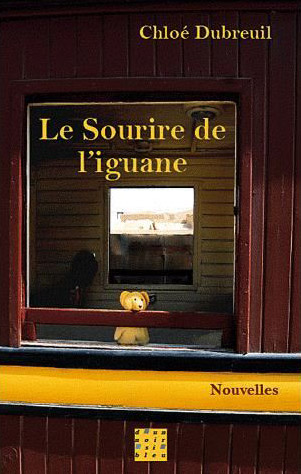
Le Sourire de l’iguane

«  La vie fait sa difficile ? Et alors ! Les rêves exploitent mes envies de démesure. Lorsque je les tiens serrés contre mon cœur, ils forment des au-delà mort-nés. Mais avant de les autoriser à s’évanouir, il me suffit de vouloir pour qu’ils aient une certaine substance… »
Vouloir. Imaginer. Se construire et se reconstruire.
Les cinq histoires de ce recueil nous dévoilent l’intimité d’une souffrance qui ne s’en laisse pas conter. D’un récit à l’autre, les personnages se retrouvent, faisant de ces nouvelles un roman déguisé.
Danya, l’adolescente beur prisonnière des traditions familiales et qui espère en un avenir théâtral.
Agatha, déchirée entre sa maladie et ses fantaisies océanes.
Lucille qui aspire à s’envoler par-dessus les murs pour voir en la rue un horizon lointain.
L’homme sans nom et sans toit qui veut croire, vestige d’espérance, en un univers moins hostile.
Et le jeune sieur M…, bien décidé à s’identifier au mythe d’Icare, à toucher du bout du cœur un peu des astres et du ciel pour évider sa mémoire, ne plus appartenir au camp des enfants pas sages.
Tous nous rappellent avec pudeur et tendresse que notre humanité est dans la quête incessante du bonheur.
Disponible en librairie et directement sur le site www.dunnoirsibleu.com
où les premières pages du recueil peuvent être feuilletées.
EXTRAITS
LA PEINE AU FOND DES CIEUX
Il semblerait qu’Athéna ait jailli du crâne de Zeus armée et casquée, pourquoi pas. Toi-même tu es bien née de la main de ton père, prête à en découdre. Cependant, est-ce l’époque qui n’est pas aussi favorable aux jeunes femmes ou ta valeur qui n’est pas aussi manifeste, incontestablement tu ne bénéficies pas de la même aura que cette déesse guerrière.

Personne n’est au courant que tu es née de la main de ton père. Tu n’es pas naïve, tu sais bien que ni ta famille, ni tes amies ne te croiraient. C’est donc une histoire que tu te racontes, dont tu te rebats les oreilles à chaque fois que ton père fait des siennes. Non qu’il s’en prenne à toi physiquement, non, la gifle ne s’est jamais répétée, mais il lui arrive d’élever la voix et de se désespérer. Quand on est de sexe féminin et donc encombrante par principe, ces moments-là ont tendance à se répéter.


LE SOURIRE DE L’IGUANE
Je devrais peut-être lui donner l’un de mes baisers. Un baiser salé pour conférer à cet instant dans lequel elle s’est enfermée davantage de saveur. Je la vois river son regard à un horizon particulier, à sa ligne d’affect. Elle est jeune et jolie, valide, pleine de vie et pourtant une sale émotion se lit sur ses traits. Je suis descendue avec ma mère à l’épicerie qui se trouve en bas de chez nous. Comme d’ordinaire, je l’attends assise sur le rebord du trottoir. J’ai du mal avec les magasins ; quelle que soit leur taille, je me sens à l’étroit entre les rayonnages. Ce qui ne m’empêche pas, quand ma mère va à l’épicerie ou à la boulangerie du coin après que je suis rentrée de mes cours, de prendre plaisir à l’accompagner. De toute manière, les médecins nous l’ont assez répété, j’ai besoin de prendre l’air le plus souvent possible. Prendre l’air, changer d’air. M’extraire régulièrement de ma chambre. C’est vrai que dans le quartier, il y a toujours quelque chose à voir, quelque chose, un rien, un lieu commun dont je puisse me pénétrer.


DIS MAMAN, DESSINE-MOI
Tu ne raconteras pas d’histoires, avait dit sa mère de sa voix enchantée. Et puis un peu plus tard : tu ne mendieras pas de douceurs, avait-elle rajouté dans un souffle avant d’allumer la radio, Chérie FM – pour une variété française en fond sonore. Tout au long de la route, Lucille avait prêté l’oreille à ces commandements, à cette litanie pleine de négation qu’elle connaissait sur le bout des syllabes. Elle l’avait fait de façon machinale. La voiture était le lieu saint de sa mère où la voix de celle-ci s’exposait avec emphase. Lieu clos, minuscule, sans échappatoire. Lucille ne pouvait que religieusement écouter. A l’intérieur de la vieille Golf, la voix tissait les minutes, colonisait le moindre espace de silence ; elle était à sa merci.


LES MOUCHES
Le carton est humide, il ne tiendra pas. Ses doigts s’agacent, ils ont perdu de leur force. Dans son dos, le pas pressé des passants lui rappelle qu’il faut qu’il se terre. Sa maison sera de carton. Il veut se dérober à leurs yeux, n’être plus qu’une chose de carton-pâte. Il a mal aux doigts. Ils sont si gonflés, violacés, encroûtés. Il n’a qu’une envie : se coucher dans son abri, se sentir loin de tout, du décor sensible comme des individus en transit. A la brune, son humanité refait surface, elle suinte par tous les pores de sa peau. Le jour, il parvient à tenir ses émotions à l’écart, mais lorsqu’une clarté de lune tache l’horizon… Le carton ne tient pas, il est trop humide. L’homme s’énerve. Il cogne l’ennemi invisible, frappe l’air autour de lui de ses poings serrés. C’est un air lourd, vicié qui le suit comme un toutou. Quoi qu’il fasse, il en a toujours après lui.


LES AVATARS DU JEUNE SIEUR M…
Le jour est venu où non content de ne plus avoir à s’exposer face contre terre, il va s’arracher à son attraction, s’éparpiller par delà cette ligne bleue du Pikes Peak dont il a appris à connaître chaque sentier, chaque dévers, chaque escarpement. Il veut s’identifier au mythe d’Icare, planer au-dessus des vallées profondes, fondre sur le downtown de Colorado Springs façon deus ex machina avant de remonter toujours plus haut, voler de plus en plus haut jusqu’à toucher du bout des ailes un peu des astres et du ciel. Il a envie que son histoire se dénoue d’elle-même. Il ne craint plus ni Wwasp,[1] ni mère. Il va leur montrer à tous qu’en cet automne qui n’avait pourtant rien de funèbre, il n’est plus un jeune homme perdu. Son paradis n’était pas situé dans le Centre. Son paradis n’est pas d’ici bas.

[1] World wide association of speciality programs and schools. Cet organisme a créé des écoles mettant en avant un programme fondé sur la modification du comportement. Ces établissements sont uniquement destinés à accueillir des jeunes protestants anglo-saxons de race blanche.