/** * REST API: WP_REST_Request class * * @package WordPress * @subpackage REST_API * @since 4.4.0 */ /** * Core class used to implement a REST request object. * * Contains data from the request, to be passed to the callback. * * Note: This implements ArrayAccess, and acts as an array of parameters when * used in that manner. It does not use ArrayObject (as we cannot rely on SPL), * so be aware it may have non-array behaviour in some cases. * * Note: When using features provided by ArrayAccess, be aware that WordPress deliberately * does not distinguish between arguments of the same name for different request methods. * For instance, in a request with `GET id=1` and `POST id=2`, `$request['id']` will equal * 2 (`POST`) not 1 (`GET`). For more precision between request methods, use * WP_REST_Request::get_body_params(), WP_REST_Request::get_url_params(), etc. * * @since 4.4.0 * * @see ArrayAccess */ class WP_REST_Request implements ArrayAccess { /** * HTTP method. * * @since 4.4.0 * @var string */ protected $method = ''; /** * Parameters passed to the request. * * These typically come from the `$_GET`, `$_POST` and `$_FILES` * superglobals when being created from the global scope. * * @since 4.4.0 * @var array Contains GET, POST and FILES keys mapping to arrays of data. */ protected $params; /** * HTTP headers for the request. * * @since 4.4.0 * @var array Map of key to value. Key is always lowercase, as per HTTP specification. */ protected $headers = array(); /** * Body data. * * @since 4.4.0 * @var string Binary data from the request. */ protected $body = null; /** * Route matched for the request. * * @since 4.4.0 * @var string */ protected $route; /** * Attributes (options) for the route that was matched. * * This is the options array used when the route was registered, typically * containing the callback as well as the valid methods for the route. * * @since 4.4.0 * @var array Attributes for the request. */ protected $attributes = array(); /** * Used to determine if the JSON data has been parsed yet. * * Allows lazy-parsing of JSON data where possible. * * @since 4.4.0 * @var bool */ protected $parsed_json = false; /** * Used to determine if the body data has been parsed yet. * * @since 4.4.0 * @var bool */ protected $parsed_body = false; /** * Constructor. * * @since 4.4.0 * * @param string $method Optional. Request method. Default empty. * @param string $route Optional. Request route. Default empty. * @param array $attributes Optional. Request attributes. Default empty array. */ public function __construct( $method = '', $route = '', $attributes = array() ) { $this->params = array( 'URL' => array(), 'GET' => array(), 'POST' => array(), 'FILES' => array(), // See parse_json_params. 'JSON' => null, 'defaults' => array(), ); $this->set_method( $method ); $this->set_route( $route ); $this->set_attributes( $attributes ); } /** * Retrieves the HTTP method for the request. * * @since 4.4.0 * * @return string HTTP method. */ public function get_method() { return $this->method; } /** * Sets HTTP method for the request. * * @since 4.4.0 * * @param string $method HTTP method. */ public function set_method( $method ) { $this->method = strtoupper( $method ); } /** * Retrieves all headers from the request. * * @since 4.4.0 * * @return array Map of key to value. Key is always lowercase, as per HTTP specification. */ public function get_headers() { return $this->headers; } /** * Canonicalizes the header name. * * Ensures that header names are always treated the same regardless of * source. Header names are always case insensitive. * * Note that we treat `-` (dashes) and `_` (underscores) as the same * character, as per header parsing rules in both Apache and nginx. * * @link https://stackoverflow.com/q/18185366 * @link https://www.nginx.com/resources/wiki/start/topics/tutorials/config_pitfalls/#missing-disappearing-http-headers * @link https://nginx.org/en/docs/http/ngx_http_core_module.html#underscores_in_headers * * @since 4.4.0 * @static * * @param string $key Header name. * @return string Canonicalized name. */ public static function canonicalize_header_name( $key ) { $key = strtolower( $key ); $key = str_replace( '-', '_', $key ); return $key; } /** * Retrieves the given header from the request. * * If the header has multiple values, they will be concatenated with a comma * as per the HTTP specification. Be aware that some non-compliant headers * (notably cookie headers) cannot be joined this way. * * @since 4.4.0 * * @param string $key Header name, will be canonicalized to lowercase. * @return string|null String value if set, null otherwise. */ public function get_header( $key ) { $key = $this->canonicalize_header_name( $key ); if ( ! isset( $this->headers[ $key ] ) ) { return null; } return implode( ',', $this->headers[ $key ] ); } /** * Retrieves header values from the request. * * @since 4.4.0 * * @param string $key Header name, will be canonicalized to lowercase. * @return array|null List of string values if set, null otherwise. */ public function get_header_as_array( $key ) { $key = $this->canonicalize_header_name( $key ); if ( ! isset( $this->headers[ $key ] ) ) { return null; } return $this->headers[ $key ]; } /** * Sets the header on request. * * @since 4.4.0 * * @param string $key Header name. * @param string $value Header value, or list of values. */ public function set_header( $key, $value ) { $key = $this->canonicalize_header_name( $key ); $value = (array) $value; $this->headers[ $key ] = $value; } /** * Appends a header value for the given header. * * @since 4.4.0 * * @param string $key Header name. * @param string $value Header value, or list of values. */ public function add_header( $key, $value ) { $key = $this->canonicalize_header_name( $key ); $value = (array) $value; if ( ! isset( $this->headers[ $key ] ) ) { $this->headers[ $key ] = array(); } $this->headers[ $key ] = array_merge( $this->headers[ $key ], $value ); } /** * Removes all values for a header. * * @since 4.4.0 * * @param string $key Header name. */ public function remove_header( $key ) { $key = $this->canonicalize_header_name( $key ); unset( $this->headers[ $key ] ); } /** * Sets headers on the request. * * @since 4.4.0 * * @param array $headers Map of header name to value. * @param bool $override If true, replace the request's headers. Otherwise, merge with existing. */ public function set_headers( $headers, $override = true ) { if ( true === $override ) { $this->headers = array(); } foreach ( $headers as $key => $value ) { $this->set_header( $key, $value ); } } /** * Retrieves the content-type of the request. * * @since 4.4.0 * * @return array Map containing 'value' and 'parameters' keys. */ public function get_content_type() { $value = $this->get_header( 'content-type' ); if ( empty( $value ) ) { return null; } $parameters = ''; if ( strpos( $value, ';' ) ) { list( $value, $parameters ) = explode( ';', $value, 2 ); } $value = strtolower( $value ); if ( strpos( $value, '/' ) === false ) { return null; } // Parse type and subtype out. list( $type, $subtype ) = explode( '/', $value, 2 ); $data = compact( 'value', 'type', 'subtype', 'parameters' ); $data = array_map( 'trim', $data ); return $data; } /** * Retrieves the parameter priority order. * * Used when checking parameters in get_param(). * * @since 4.4.0 * * @return array List of types to check, in order of priority. */ protected function get_parameter_order() { $order = array(); $content_type = $this->get_content_type(); if ( $content_type['value'] === 'application/json' ) { $order[] = 'JSON'; } $this->parse_json_params(); // Ensure we parse the body data. $body = $this->get_body(); if ( 'POST' !== $this->method && ! empty( $body ) ) { $this->parse_body_params(); } $accepts_body_data = array( 'POST', 'PUT', 'PATCH', 'DELETE' ); if ( in_array( $this->method, $accepts_body_data ) ) { $order[] = 'POST'; } $order[] = 'GET'; $order[] = 'URL'; $order[] = 'defaults'; /** * Filters the parameter order. * * The order affects which parameters are checked when using get_param() and family. * This acts similarly to PHP's `request_order` setting. * * @since 4.4.0 * * @param array $order { * An array of types to check, in order of priority. * * @param string $type The type to check. * } * @param WP_REST_Request $this The request object. */ return apply_filters( 'rest_request_parameter_order', $order, $this ); } /** * Retrieves a parameter from the request. * * @since 4.4.0 * * @param string $key Parameter name. * @return mixed|null Value if set, null otherwise. */ public function get_param( $key ) { $order = $this->get_parameter_order(); foreach ( $order as $type ) { // Determine if we have the parameter for this type. if ( isset( $this->params[ $type ][ $key ] ) ) { return $this->params[ $type ][ $key ]; } } return null; } /** * Sets a parameter on the request. * * @since 4.4.0 * * @param string $key Parameter name. * @param mixed $value Parameter value. */ public function set_param( $key, $value ) { $order = $this->get_parameter_order(); $this->params[ $order[0] ][ $key ] = $value; } /** * Retrieves merged parameters from the request. * * The equivalent of get_param(), but returns all parameters for the request. * Handles merging all the available values into a single array. * * @since 4.4.0 * * @return array Map of key to value. */ public function get_params() { $order = $this->get_parameter_order(); $order = array_reverse( $order, true ); $params = array(); foreach ( $order as $type ) { // array_merge / the "+" operator will mess up // numeric keys, so instead do a manual foreach. foreach ( (array) $this->params[ $type ] as $key => $value ) { $params[ $key ] = $value; } } return $params; } /** * Retrieves parameters from the route itself. * * These are parsed from the URL using the regex. * * @since 4.4.0 * * @return array Parameter map of key to value. */ public function get_url_params() { return $this->params['URL']; } /** * Sets parameters from the route. * * Typically, this is set after parsing the URL. * * @since 4.4.0 * * @param array $params Parameter map of key to value. */ public function set_url_params( $params ) { $this->params['URL'] = $params; } /** * Retrieves parameters from the query string. * * These are the parameters you'd typically find in `$_GET`. * * @since 4.4.0 * * @return array Parameter map of key to value */ public function get_query_params() { return $this->params['GET']; } /** * Sets parameters from the query string. * * Typically, this is set from `$_GET`. * * @since 4.4.0 * * @param array $params Parameter map of key to value. */ public function set_query_params( $params ) { $this->params['GET'] = $params; } /** * Retrieves parameters from the body. * * These are the parameters you'd typically find in `$_POST`. * * @since 4.4.0 * * @return array Parameter map of key to value. */ public function get_body_params() { return $this->params['POST']; } /** * Sets parameters from the body. * * Typically, this is set from `$_POST`. * * @since 4.4.0 * * @param array $params Parameter map of key to value. */ public function set_body_params( $params ) { $this->params['POST'] = $params; } /** * Retrieves multipart file parameters from the body. * * These are the parameters you'd typically find in `$_FILES`. * * @since 4.4.0 * * @return array Parameter map of key to value */ public function get_file_params() { return $this->params['FILES']; } /** * Sets multipart file parameters from the body. * * Typically, this is set from `$_FILES`. * * @since 4.4.0 * * @param array $params Parameter map of key to value. */ public function set_file_params( $params ) { $this->params['FILES'] = $params; } /** * Retrieves the default parameters. * * These are the parameters set in the route registration. * * @since 4.4.0 * * @return array Parameter map of key to value */ public function get_default_params() { return $this->params['defaults']; } /** * Sets default parameters. * * These are the parameters set in the route registration. * * @since 4.4.0 * * @param array $params Parameter map of key to value. */ public function set_default_params( $params ) { $this->params['defaults'] = $params; } /** * Retrieves the request body content. * * @since 4.4.0 * * @return string Binary data from the request body. */ public function get_body() { return $this->body; } /** * Sets body content. * * @since 4.4.0 * * @param string $data Binary data from the request body. */ public function set_body( $data ) { $this->body = $data; // Enable lazy parsing. $this->parsed_json = false; $this->parsed_body = false; $this->params['JSON'] = null; } /** * Retrieves the parameters from a JSON-formatted body. * * @since 4.4.0 * * @return array Parameter map of key to value. */ public function get_json_params() { // Ensure the parameters have been parsed out. $this->parse_json_params(); return $this->params['JSON']; } /** * Parses the JSON parameters. * * Avoids parsing the JSON data until we need to access it. * * @since 4.4.0 * @since 4.7.0 Returns error instance if value cannot be decoded. * @return true|WP_Error True if the JSON data was passed or no JSON data was provided, WP_Error if invalid JSON was passed. */ protected function parse_json_params() { if ( $this->parsed_json ) { return true; } $this->parsed_json = true; // Check that we actually got JSON. $content_type = $this->get_content_type(); if ( empty( $content_type ) || 'application/json' !== $content_type['value'] ) { return true; } $body = $this->get_body(); if ( empty( $body ) ) { return true; } $params = json_decode( $body, true ); /* * Check for a parsing error. * * Note that due to WP's JSON compatibility functions, json_last_error * might not be defined: https://core.trac.wordpress.org/ticket/27799 */ if ( null === $params && ( ! function_exists( 'json_last_error' ) || JSON_ERROR_NONE !== json_last_error() ) ) { // Ensure subsequent calls receive error instance. $this->parsed_json = false; $error_data = array( 'status' => WP_Http::BAD_REQUEST, ); if ( function_exists( 'json_last_error' ) ) { $error_data['json_error_code'] = json_last_error(); $error_data['json_error_message'] = json_last_error_msg(); } return new WP_Error( 'rest_invalid_json', __( 'Invalid JSON body passed.' ), $error_data ); } $this->params['JSON'] = $params; return true; } /** * Parses the request body parameters. * * Parses out URL-encoded bodies for request methods that aren't supported * natively by PHP. In PHP 5.x, only POST has these parsed automatically. * * @since 4.4.0 */ protected function parse_body_params() { if ( $this->parsed_body ) { return; } $this->parsed_body = true; /* * Check that we got URL-encoded. Treat a missing content-type as * URL-encoded for maximum compatibility. */ $content_type = $this->get_content_type(); if ( ! empty( $content_type ) && 'application/x-www-form-urlencoded' !== $content_type['value'] ) { return; } parse_str( $this->get_body(), $params ); /* * Amazingly, parse_str follows magic quote rules. Sigh. * * NOTE: Do not refactor to use `wp_unslash`. */ if ( get_magic_quotes_gpc() ) { $params = stripslashes_deep( $params ); } /* * Add to the POST parameters stored internally. If a user has already * set these manually (via `set_body_params`), don't override them. */ $this->params['POST'] = array_merge( $params, $this->params['POST'] ); } /** * Retrieves the route that matched the request. * * @since 4.4.0 * * @return string Route matching regex. */ public function get_route() { return $this->route; } /** * Sets the route that matched the request. * * @since 4.4.0 * * @param string $route Route matching regex. */ public function set_route( $route ) { $this->route = $route; } /** * Retrieves the attributes for the request. * * These are the options for the route that was matched. * * @since 4.4.0 * * @return array Attributes for the request. */ public function get_attributes() { return $this->attributes; } /** * Sets the attributes for the request. * * @since 4.4.0 * * @param array $attributes Attributes for the request. */ public function set_attributes( $attributes ) { $this->attributes = $attributes; } /** * Sanitizes (where possible) the params on the request. * * This is primarily based off the sanitize_callback param on each registered * argument. * * @since 4.4.0 * * @return true|WP_Error True if parameters were sanitized, WP_Error if an error occurred during sanitization. */ public function sanitize_params() { $attributes = $this->get_attributes(); // No arguments set, skip sanitizing. if ( empty( $attributes['args'] ) ) { return true; } $order = $this->get_parameter_order(); $invalid_params = array(); foreach ( $order as $type ) { if ( empty( $this->params[ $type ] ) ) { continue; } foreach ( $this->params[ $type ] as $key => $value ) { if ( ! isset( $attributes['args'][ $key ] ) ) { continue; } $param_args = $attributes['args'][ $key ]; // If the arg has a type but no sanitize_callback attribute, default to rest_parse_request_arg. if ( ! array_key_exists( 'sanitize_callback', $param_args ) && ! empty( $param_args['type'] ) ) { $param_args['sanitize_callback'] = 'rest_parse_request_arg'; } // If there's still no sanitize_callback, nothing to do here. if ( empty( $param_args['sanitize_callback'] ) ) { continue; } $sanitized_value = call_user_func( $param_args['sanitize_callback'], $value, $this, $key ); if ( is_wp_error( $sanitized_value ) ) { $invalid_params[ $key ] = $sanitized_value->get_error_message(); } else { $this->params[ $type ][ $key ] = $sanitized_value; } } } if ( $invalid_params ) { return new WP_Error( 'rest_invalid_param', sprintf( __( 'Invalid parameter(s): %s' ), implode( ', ', array_keys( $invalid_params ) ) ), array( 'status' => 400, 'params' => $invalid_params ) ); } return true; } /** * Checks whether this request is valid according to its attributes. * * @since 4.4.0 * * @return bool|WP_Error True if there are no parameters to validate or if all pass validation, * WP_Error if required parameters are missing. */ public function has_valid_params() { // If JSON data was passed, check for errors. $json_error = $this->parse_json_params(); if ( is_wp_error( $json_error ) ) { return $json_error; } $attributes = $this->get_attributes(); $required = array(); // No arguments set, skip validation. if ( empty( $attributes['args'] ) ) { return true; } foreach ( $attributes['args'] as $key => $arg ) { $param = $this->get_param( $key ); if ( isset( $arg['required'] ) && true === $arg['required'] && null === $param ) { $required[] = $key; } } if ( ! empty( $required ) ) { return new WP_Error( 'rest_missing_callback_param', sprintf( __( 'Missing parameter(s): %s' ), implode( ', ', $required ) ), array( 'status' => 400, 'params' => $required ) ); } /* * Check the validation callbacks for each registered arg. * * This is done after required checking as required checking is cheaper. */ $invalid_params = array(); foreach ( $attributes['args'] as $key => $arg ) { $param = $this->get_param( $key ); if ( null !== $param && ! empty( $arg['validate_callback'] ) ) { $valid_check = call_user_func( $arg['validate_callback'], $param, $this, $key ); if ( false === $valid_check ) { $invalid_params[ $key ] = __( 'Invalid parameter.' ); } if ( is_wp_error( $valid_check ) ) { $invalid_params[ $key ] = $valid_check->get_error_message(); } } } if ( $invalid_params ) { return new WP_Error( 'rest_invalid_param', sprintf( __( 'Invalid parameter(s): %s' ), implode( ', ', array_keys( $invalid_params ) ) ), array( 'status' => 400, 'params' => $invalid_params ) ); } return true; } /** * Checks if a parameter is set. * * @since 4.4.0 * * @param string $offset Parameter name. * @return bool Whether the parameter is set. */ public function offsetExists( $offset ) { $order = $this->get_parameter_order(); foreach ( $order as $type ) { if ( isset( $this->params[ $type ][ $offset ] ) ) { return true; } } return false; } /** * Retrieves a parameter from the request. * * @since 4.4.0 * * @param string $offset Parameter name. * @return mixed|null Value if set, null otherwise. */ public function offsetGet( $offset ) { return $this->get_param( $offset ); } /** * Sets a parameter on the request. * * @since 4.4.0 * * @param string $offset Parameter name. * @param mixed $value Parameter value. */ public function offsetSet( $offset, $value ) { $this->set_param( $offset, $value ); } /** * Removes a parameter from the request. * * @since 4.4.0 * * @param string $offset Parameter name. */ public function offsetUnset( $offset ) { $order = $this->get_parameter_order(); // Remove the offset from every group. foreach ( $order as $type ) { unset( $this->params[ $type ][ $offset ] ); } } /** * Retrieves a WP_REST_Request object from a full URL. * * @static * @since 4.5.0 * * @param string $url URL with protocol, domain, path and query args. * @return WP_REST_Request|false WP_REST_Request object on success, false on failure. */ public static function from_url( $url ) { $bits = parse_url( $url ); $query_params = array(); if ( ! empty( $bits['query'] ) ) { wp_parse_str( $bits['query'], $query_params ); } $api_root = rest_url(); if ( get_option( 'permalink_structure' ) && 0 === strpos( $url, $api_root ) ) { // Pretty permalinks on, and URL is under the API root. $api_url_part = substr( $url, strlen( untrailingslashit( $api_root ) ) ); $route = parse_url( $api_url_part, PHP_URL_PATH ); } elseif ( ! empty( $query_params['rest_route'] ) ) { // ?rest_route=... set directly $route = $query_params['rest_route']; unset( $query_params['rest_route'] ); } $request = false; if ( ! empty( $route ) ) { $request = new WP_REST_Request( 'GET', $route ); $request->set_query_params( $query_params ); } /** * Filters the request generated from a URL. * * @since 4.5.0 * * @param WP_REST_Request|false $request Generated request object, or false if URL * could not be parsed. * @param string $url URL the request was generated from. */ return apply_filters( 'rest_request_from_url', $request, $url ); } } Le temps d’Uranie | Chloé Dubreuil

Le temps d’Uranie

Lucas Clément, hanté par un drame familial, voit brusquement son passé ressurgir à l’annonce du décès d’un oncle avec lequel, quelques années auparavant, il avait pénétré les arcanes du Magistère alchimique.
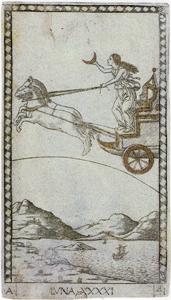
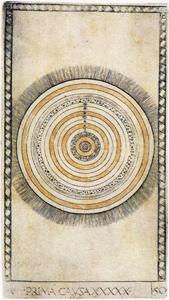
La mort étrange de celui-ci, l’héritage que reçoit le jeune homme : un recueil d’estampes du Quattrocento Les Tarots de Mantegna, aussi fascinant qu’unique de par la particularité qu’il recèle en marge de ses images, vont amener le jeune homme à plonger dans les méandres d’une initiation délétère.
En essayant de comprendre pour quelle raison ce livre muet a été dissimulé au dos de la « céleste » Uranie, tableau allégorique de la même époque, c’est tout l’univers humaniste italien qui nous est ainsi dévoilé.

De Paris à Ferrare, de Lyon à Florence, du Vézelay ésotérique à un massif central tellurique, alchimie, magie, franc-maçonnerie s’interpénètrent avec passion par-delà l’espace et le temps pour nous livrer une histoire placée sous le sceau de la quête de soi et de l’amour.

Car dans le Temps d’Uranie, portés par des personnages qui vont aider Lucas dans sa remontée aux sources ou se dresser contre lui, couvent la haine et la peur, l’esprit du beau et l’amitié ; autant de sentiments qui ont parcouru les courants souterrains d’une pensée Renaissance et qui retrouvent dans ce livre une seconde vie.

EXTRAIT

‘ Camerino, mars 1497 Jour – 18
Il pouvait encore entendre le grésillement des flammes, discerner les visages auréolés d’hébétude ou de tension extatique. Il pouvait encore sentir, collée à sa peau, la puanteur de la honte qui s’était abattue sur la ville, la cruelle effluence de cuir et de bois brûlés. Il était fatigué. Fatigué de la folie de ses semblables qui s’obstinaient à ne pas comprendre. L’indice de mort était dans son ciel, il ne pouvait plus se permettre d’attendre. Il craignait pour son Livre, sa plus belle réalisation. Il devait effectuer ce voyage avant de suivre son maître sur les voies de l’illumination ultime.
***
Lyon, automne 2007
Arrivé devant l’immeuble, le jeune homme lève les yeux sur la galerie croisée d’ogives, remonte ainsi de deux étages, une lumière flirte avec le crépi rosé ; Etienne Gabriagues n’a donc pas quitté l’appartement. Loin au-dessus des toits, un nuage aux contours reptiliens s’obstine à stagner dans le ciel. Au commencement, il y eut une nuée d’orages… et ensuite la descente dans le monde obscur. Lucas inspire (sale odeur de poubelle qui déborde) pour calmer les battements désordonnés de son cœur et pénètre dans la cour de graviers. Aucune fausse note ne devra venir troubler sa soirée. Il lui faudra s’affirmer détendu et serein pour tenir à distance sa morne anxiété. Thiébault est mort, drôles de journées à venir… Détaché d’une confusion dont il ne sait que faire, Lucas a décidé de suivre les traces de son oncle. Contrairement à ce que lui a déclaré l’historien, il n’a pas d’alternative. Une brèche s’est ouverte en lui, il est en état de siège. La fuite ne justifie plus rien, sa mémoire est de nouveau à vif. Suivre les traces de son oncle et en premier lieu s’attacher à séparer la terre du feu, le subtil de l’épais, délicatement, avec grande intelligence. Ce serait l’idéal bien sûr, délicatement, avec grande intelligence, mais déjà se mettre sur la voie du VITRIOL… « Visite l’intérieur de la terre, en rectifiant, tu trouveras la Pierre cachée. » Pour l’heure, c’est le Livre qui a été caché. Dès qu’il sera rentré, il faudra que l’historien l’entretienne du tableau. Sept, six, cinq… Le tableau qui dissimule en lui bien des singularités.’

Les tarots de Mantegna
La_Cause_Premiere La_Lune la_muse_Cleo Le_genie_Iliaco